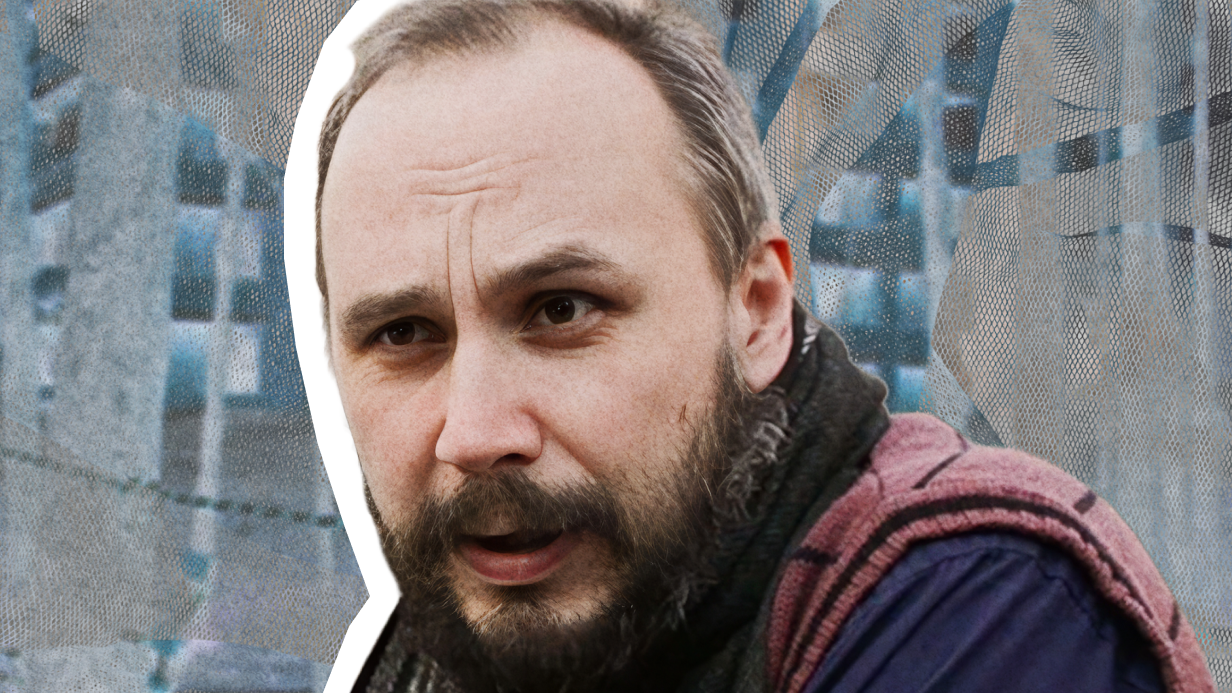
“Mathematics Is a Live Performance.” Misha Verbitsky on Intelligent Mold, Non-Consensus Realities, and Aesthetics as the Last Refuge of Human Reason
In June 2026, the mathematician Misha Verbitsky ended up in an Armenian jail, caught in the automatic machinery of intergovernmental agreements that Russia has pressed into service for political persecution. Starting from that story of police and politics, his conversation with T-invariant editor Alexander Sergeev turns steadily more philosophical. How is polarization destroying scientific unity? Why doesn’t a powerful intellect protect anyone from insane ideas? And how does the “intelligent mold” of AI call into question both human cognitive exceptionalism and the value of mathematical truth, returning us to first principles — the joy of communication and pure aesthetics?
Top news on scientists’ work and experiences during the war, along with videos and infographics — subscribe to the T-invariant Telegram channel to stay updated.
“Flagged”: A Convention Abused
With Russia’s war against Ukraine grinding on, Armenia has a reputation as an excellent place for people from Russia and from the world beyond the former Soviet space to meet. Pashinyan’s pro-Western course, the country’s pointed friendliness toward Russians who have relocated there, and direct flights to and from Russia all create the impression of a protected zone. That is why Yerevan was chosen for a reunion of alumni of Moscow’s School No. 57, an elite math-and-physics school. For Misha Verbitsky, who works in Brazil, these are close friends — almost a second family. But the illusion of safety dissolved at passport control: instead of a reunion with his classmates, three days went by in a police cell at the airport.
T-invariant: So you had no worries at all before the flight?
Misha Verbitsky: None — and that was a mistake, obviously. I should have been more careful. On arrival, right there at passport control, there’s a long, drawn-out fuss; then they walk you down corridors for quite a while and hand you over to the police. The police slap handcuffs on me, march me off somewhere far away again, and inform me that I’m being held for three days, then there’s a court hearing, and then I’ll spend another 30 days waiting to be deported to Russia.
T-i: Where were you held?
MV: Right there in the airport, in a small cell with bars on it. They kept saying an investigator was on his way. That went on for about six hours.
T-i: If there’s an investigator, doesn’t there have to be a lawyer too?
MV: No. No lawyer was part of the plan. The investigator never showed up either. But those particular officers were fairly kind to me and let me use my cell phone. I didn’t call anyone, I just fired off a message. Pretty soon my wife came rushing over, along with some classmates. And they brought a lawyer — the wonderful Vache Simonyan, who was a huge help to us. He explained afterward how it works: they hold you for 72 hours with no investigator and no lawyer, waiting for Russia to confirm whether it actually wants the person. Russia then has to supply court documents for the extradition to proceed. After three days the court rules, and the ruling is almost always the same: another 30–40 days behind bars while the full set of paperwork arrives from Russia. Then the court checks whether Armenian law contains any provision criminalizing whatever the person is being extradited for. Along the way — during the first 15 days — you can apply for refugee status, provided you have a lawyer. I actually managed to file, just in case. It doesn’t help much, though: you still can’t leave Armenia, and there’s a fair chance you’ll be locked up anyway.
T-i: Did they present anything? Any grounds?
MV: Well, they had a criminal charge written down there.
T-i: That was everything anyone knew for three days? No signals from Russia?
MV: Russia verbally demanded that I be held pending extradition and promised to send the official request later. But no fully formal demand ever arrived. Normally the Armenians respond favorably to an informal request like that and detain the person. They didn’t do that with me, because a big fuss blew up. Formally, Armenia did everything by the book — after all, Russia failed to produce the documents on time.
T-i: And Russia Day (June 12) [Russia’s national holiday — T-invariant] fell on a Friday. Did the long weekend help you?
MV: Absolutely! They were all just off drinking.
My sense is that they weren’t especially invested in nailing me. Somebody snitched, a case got opened… There isn’t really any purpose behind it. This enormous machine runs more or less on its own, without thinking about anyone in particular. One little cog turns, catches on another… Or maybe not… Because back in early 2024, a whole batch of articles came out in Russia attacking the math department [at Moscow’s Higher School of Economics, where Verbitsky taught — T-invariant] and me personally. It was a smear campaign against the people there who were, let’s say, politically unreliable. The wording was hilarious: supposedly I had founded some sort of “club of Russia-haters.”
T-i: Did the noise in the press and in the community actually help?
MV: Oh, “help” is putting it mildly — it saved me. Because once they let me out after 72 hours, there was still a risk of getting stranded. They handed me a paper saying they had no claims against me, but I was still red-flagged. Meaning that at a border crossing, in the best case they simply don’t let me through, and in the worst the handcuffs come back out. And for ordinary people — I was in a privileged position — there’s only one solution: wait for a “humanitarian corridor.” That’s when, at the request of human rights organizations or the ombudsman, the border guards briefly lower the red flag that’s keeping you from crossing. Then you have to drive to Georgia immediately — you can’t buy a plane ticket in advance, since nobody knows when the border will open up.
T-i: What is this flag, exactly, and what database is it in? People mentioned the Chișinău Convention. Does it have anything to do with Interpol?
MV: No, no. Back in 2002 the CIS countries [the Commonwealth of Independent States, the post-Soviet bloc — T-invariant] drew up a convention on sharing judicial data and handing over criminals. Interestingly, Russia formally joined it only in 2023. And Chișinău itself — that is, Moldova — isn’t a party to it.
T-INVARIANT BACKGROUNDER
The CIS conventions On Legal Assistance…
The Chișinău Convention (2002) replaces, for the countries that signed it, the earlier Minsk Convention (1993). Both cover extradition, among other things. The Chișinău text is more carefully drafted: it spells out procedures for cooperation and options for the defense more clearly, but it also lowers the threshold for extradition — from charges carrying a minimum of one year in prison down to six months. On paper, both conventions rule out politically motivated extradition, but in practice that provision often fails. In the 1990s all 12 CIS countries signed the Minsk Convention. Eight of them have since switched to the Chișinău version. The only country to have denounced it is Ukraine (in 2024). Three remain under the Minsk Convention: Turkmenistan, Moldova, and Georgia, which left the CIS in 2009. The latter two apply it only in a limited way — to the extent that it doesn’t conflict with the legal principles of the European Court of Human Rights. Even there, however, a politically motivated Russian extradition request can lead to detention and the need for legal assistance.
The Rozysk (“Wanted”) database on the website of Russia’s Interior Ministry is blocked from abroad — you need a Russian VPN service to reach it. For a preliminary check, you can download a copy of the database that the outlet Mediazona updates on GitHub from time to time. The version currently posted there is from March 2026. It lists 187,000 people, including 72,000 who were in the database earlier but were later removed.
T-i: A class reunion is a private affair, of course, but technically it’s no different from traveling to a scientific conference or a work meeting. So does that mean the CIS countries are closed to anyone flagged in Russia? Armenia and Kazakhstan included — the very places so many people moved to after leaving Russia…
MV: Definitely. But there’s a difference. In its entire history Armenia has extradited only a handful of people, and nearly all of them were genuine criminals, not political cases. It usually won’t hand over people charged with economic crimes either, if there’s reason to think the case is political. Kazakhstan, on the other hand, extradites practically everyone.
T-i: Until recently, the CIS countries served as neutral ground where scientists from Russia and from the rest of the world, including Russian émigrés, could interact. Is that neutral ground now gradually disappearing?
MV: Unfortunately, yes. And Europe, too, is methodically closing its borders to anyone with a Russian passport. Never mind that Europe has now started handing refugees over to Russia. America extradites them as well. In general, I recommend Latin America to everyone. They still have visa-free travel with Russia and very lenient laws… Extradition treaties formally exist, but the question is whether anyone will actually apply them. Which, by the way, I have yet to find out for myself.
T-i: Lawyers say that if you carry a Russian “black mark” — extremism, terrorism, and the like — then traveling to Brazil, say, means preparing documents in advance to explain your case.
MV: Absolutely — you’ll have to hire a lawyer right away. But in all the time I’ve lived in Brazil, I’ve never once been detained. When it does happen, the principle is simple: political cases don’t get extradited, in any form. But proving that a case is political takes effort and money, obviously. And the noise will start up all over again.
The Surrender of Reason: Between Propaganda and Heresy
Mathematics has always been a connected space. That wholeness is sustained by networks of teacher-to-student descent — as at School No. 57 — and by shared standards of intellectual quality that, as the mathematician Vitaly Arnold liked to put it, citing his colleague Michael Tsfasman, teach you to tell “a claim that has actually been made from one that hasn’t, and a proved claim from an unproved one.” But politics keeps methodically attacking that connectedness. And it isn’t only outright bans on collaboration; there are internal barriers as well, when building an elaborate case for insane ideas turns into a kind of intellectual challenge and a form of psychological defense.
T-i: How do political, legal, and ideological obstacles affect actual scientific work? Is today’s fragmentation of the mathematical community comparable to that of the Soviet period?
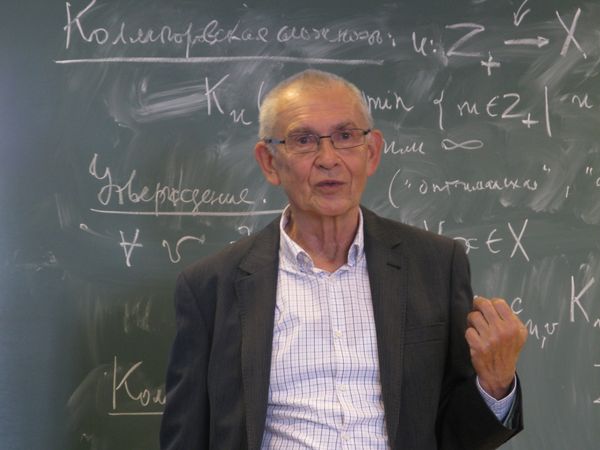
MV: Under Soviet rule you couldn’t so much as mention a mathematician who had left the country. It simply didn’t get past the censors. And you couldn’t send a paper to a foreign journal, either. There were clever ways around that. Yuri Ivanovich Manin, for instance, knew of a mailbox from which letters actually got through. Meaning there was a clerk sitting there who had decided not to stop mail addressed to scientific journals. That’s how some of his papers, and his students’ papers, ended up published in the West.
T-i: So it wasn’t even a ban as such — the letters just didn’t arrive?
MV: Oh, there was a ban too: the First Department [the KGB-supervised security office attached to every Soviet institution — T-invariant] simply wouldn’t clear the papers. Only personal correspondence bypassed it. Yuri Ivanovich wrote a paper with Volodya Drinfeld on vector bundles over complex projective spaces, mailed it as an ordinary letter to Atiyah or Hitchin, they added roughly as much text of their own, and published it in a journal. That’s how one of the most famous and most cited papers of all came about: ADHM (Atiyah–Drinfeld–Hitchin–Manin) — everyone still knows that acronym. And all of it happened because Yuri Ivanovich knew the right mailbox.
T-i: Well, email still works, at least. What about publishing?
MV: For a while there were problems. Some American universities ban professional contact with Russian citizens. You can’t invite someone to campus, say. Co-authorship is easier. In Germany they tightened the screws pretty hard at the start of the war, and then began gradually loosening them. I haven’t heard of anyone having a paper turned down by a Western mathematics journal, though in other fields that happens all the time.
For mathematicians in Russia, ties with the West have effectively been replaced by ties with China. Professor Shing-Tung Yau and Professor Gang Tian moved to China a long time ago and are building a fairly modern mathematical structure there. In those two particular circles, at least, mathematics is doing very well. And they’re glad to invite our colleagues from Russia.
T-i: Many colleagues in Russia support Putin’s war…
MV: …more than half of them, by my estimate.
T-i: Is professional common ground with them eroding? Can you still work on mathematical problems with them across such sharp ideological divides?
MV: Hell if I know. Take me: I’m pro-Israel. And I suspect that an enormous number of my Western colleagues are anti-Israel, because they’ve signed some nasty thing or other against Israel. That upsets me, of course, but it doesn’t stop me from talking to them. On the other hand, I have two co-authors who used to be close friends, and then, when the anti-Israel demonstrations broke out, the anti-Israel one stopped speaking to the one who’s mildly pro-Israel: for him that was beyond the pale.
T-i: So the Israel question is even more destructive to relationships right now than the Russian one?
MV: No question. I have friends whose views are pure vatnik [Russian slang for a knee-jerk pro-Kremlin patriot — T-invariant]. But they’re mathematicians, and that has never stopped me. Although, on the other hand, take Lyosha Bondal, a great Russian mathematician and an active supporter of the “special military operation” [the Kremlin’s official term for the war against Ukraine — T-invariant], who recently tore into me on Facebook — specifically over political views.
T-i: How does it happen that people with a scientific cast of mind — mathematicians, of all people — stop thinking rationally in the social and political sphere and end up holding views that are sometimes completely insane?
MV: The two go together beautifully. It’s well known that the higher a person’s intelligence, the better he is at finding online support for absolutely delusional ideas. Bondal, again, read Dmitry Yevgenyevich Galkovsky and got swept up in his rather unhinged conspiracy theory, which incidentally incorporates an expanded version of Fomenkoism [the pseudohistorical “New Chronology” of the mathematician Anatoly Fomenko, which holds that ancient and medieval history was invented — T-invariant].
T-i: Yes, I’ve run into smart people passionately defending a literalist reading of biblical myth and treating it as an intellectual challenge…
MV: I was rereading an old essay by Dugin the other day — about all the gore in Platonov’s Chevengur, and about how the meaning of the Russian national idea is to spill as much blood as possible and then do yourself in. Sorokin has that wonderful Platonov pastiche in Blue Lard — the bit about the “slice-hauler.” He later expanded the slice-hauler into an entire book, but it came out far better in Blue Lard. Reading that in 1999, I wondered whether I could make myself believe it: that this ultimate slaughter of human beings really is the bright future for everyone. That sort of exercise — placing yourself inside a particular intellectual framework and working within it — is pretty absorbing. I played around with Fomenkoism for a while too, coming up with ways to explain why a conspiratorial chronology might make some kind of sense. That was an entertaining pastime as well.
Fomenko has successors these days, by the way — it’s called “Great Tartaria.” An entire community, and one that has penetrated fairly deep into the West. Based on an analysis of the amount of mud on the streets of Moscow, they believe that a nuclear war took place at the end of the 17th century. Great Mongolia (also known as Tartaria), which ruled the whole world, was destroyed, and then history was rewritten to conspiratorially shrink it down to the size of Russia.
T-i: Along similar lines, I’ve come across the claim that theology is the branch of mathematics that studies the logical consequences of the axiom that an omnipotent being exists.
MV: Yes, that goes back to Gödel — who was always more or less crazy to begin with, but kept going off his rocker more and more as he went on. He was a genius, after all, and geniuses have a way of being madmen. And right at the very end he wrote a very good mathematical proof of the existence of God. The problem is that it proves the existence not only of God but also of Cthulhu and every other infernal character out of Lovecraft. Which is to say, we don’t really understand what it is he proved. It was Anselm’s ontological argument — he rewrote it in mathematical symbols, very convincingly.
The Elephant in Leiden’s China Shop: A Declaration of Schism
Lately the polarization over artificial intelligence has become as fraught as the political fault lines themselves. On one side, AI opens up astonishing new possibilities; on the other, it generates a garden of forking paths in which anyone can find a narrative to suit his taste. Both have the potential to devalue human beings and their aspirations. Reacting to the arrival of AI, the mathematical community has tried to cement a reality that is slipping away and to prolong the “golden age” of mathematical infallibility. Hundreds of researchers signed the Leiden Declaration on artificial intelligence and mathematics (Russian AI translation), which articulates five fundamental values of the discipline. The catch is that, in order to defend those values against AI, the declaration calls for boycotting anyone who does not share them (AI corporations first and foremost), for seeking help from the state, and for tightening copyright protection.
T-i: The Leiden Declaration states that its goal is to unite the mathematical community, but what it actually calls for is division: a rigid ethical doctrine, instructions on how to comply with it, a call to boycott those who disagree…
MV: That’s a very interesting reading. What I got out of it was a set of sugar-glazed banalities — “the sky is blue,” “the sun rises in the east” — along with a great deal of verbal filler — to be nice. I’m not thrilled with the text, but that’s more because it’s a total artistic failure than because of any ideas in it, which I simply didn’t find. Then again, maybe I just read it badly.
T-i: What do you make of the call to support state institutions out of distrust of the AI companies, whose tools could make mathematical knowledge unverifiable for anyone without expensive equipment?
MV: Well, that’s a tug-of-war: we have quite a few advanced systems capable of “unpacking” mathematical texts, and until recently almost all of them were American. The Europeans had nothing of the sort — so this is their way of signaling to their governments: “We’re falling behind here, help us out.”
T-i: The declaration’s authors are worried about mathematics becoming dependent on large, expensive systems. A pencil and paper used to be enough; now you need powerful AI, the way physicists need a collider and astronomers need big telescopes. Add neural-network hallucinations to that, and in terms of accessibility and reliability mathematics ends up on a par with the natural sciences.
MV: Mathematics is already on a par with the natural sciences — our proofs play the same role experiments do. All that happens is that one more instrument for mathematical research appears. Old-school mathematics will probably survive somewhere, but in certain areas not using this instrument will be flat-out absurd.
T-i: Something else that alarmed me was the call to give mathematicians the right to forbid AI training on their papers. Copyright is an outdated and burdensome construct as it is, and this would inflate it further.
MV: For that sort of thing people should just get a good kicking… Right now any number of artists’ and musicians’ organizations are trying to fight AI trained on their work. This whole fuss over copyright is pure foolishness. Fortunately, at the moment you can’t really extract works from an LLM. But there are attempts to pass laws requiring LLMs to disclose what came from where.
If they pass, everything collapses. Because then you’ll be able to sue over copyright. The lawyers will come swarming in… Why is medicine so expensive in America? Because you need a lawyer for every sneeze. The same thing will happen to AI — it’ll simply be trampled into the mud. But China won’t be doing any of that. And in order not to fall behind, I don’t think such laws will be passed. Otherwise it’s a catastrophe. In practice, though, the forces of reason have been winning more often than not over the past 20 years.
T-i: How justified is the demand — and it turns up in more places than the Leiden Declaration — that scientific papers must state how AI was used: for what, how extensively, practically down to the prompts?
MV: Right, and nobody is going to do it. In principle it would be nice to know that a paper sent out for review was written with AI. People who use AI ethically are easier to deal with. But it’s the kind of ethics nobody can really observe or explain. I, for instance, use AI only for grant applications — which is formally prohibited, but nobody is tracking it. For writing my own mathematical texts I don’t use AI. I’m even rather pleased that they contain the kinds of characteristic mistakes an AI doesn’t make.
T-i: Isn’t that the same as insisting on writing by hand rather than on a “soulless typewriter”?
MV: Maybe I’m old-fashioned. But I’m afraid that if you crank out ten papers a week, the quality is going to suffer. Doing it by hand keeps me in check a little.
T-i: The astrophysicist Sergei Popov recently urged people to work without AI whenever possible so as not to lose their skills. Then again, if a machine can handle the job, it’s rather beneath a human being to be doing it.
MV: Right now AI is like a bad graduate student. Suppose I’m a big boss with an endless supply of bad grad students. I have them all write texts and then publish under my own name. The students would at least get a little smarter out of it. But AI isn’t going to get any smarter from my efforts, so there’s no benefit. What will happen is that the quality of my own papers slides downhill.
T-i: But there are problems so difficult that you simply don’t have enough time to solve them with your own head. The famous abc conjecture, for instance.
MV: It isn’t clear whether AI will help us with questions like that. It does a decent job on olympiad problems. In combinatorics it has cracked problems people couldn’t solve for years. But on problems at the level of the abc conjecture it’s still the “dim grad student,” with no real progress. As an artistic creator, on the other hand, it’s very interesting — paintings, say, and “plotless” texts. And extremely, extremely prolific.
T-i: The Leiden Declaration also worries about the reliability of mathematical knowledge in the age of AI: it writes proofs that look highly convincing but in fact contain errors.
MV: They look convincing to a fool — or to me, if I’m not a specialist in the particular field.
I’ve been at this every day for a year and I’m used to it by now: it has a certain characteristic “format” it lies in — you just have to learn to recognize it. At one point we spent nearly three months on a single problem. The AI kept confidently telling me it was all obvious. I’d ask it to back that up — and it would hallucinate references at me. And the question was too subtle, too technical, and completely outside my own area. In the end I wrote to a colleague, and he explained the whole thing immediately — in three lines, literally. But there was no getting that out of the AI.
T-i: And when you showed it the specialist’s answer?
MV: I didn’t show it. Show whom? There’s no “audience” in there. It’s like mold (in the good sense of the word) — there’s no central personality. Sometimes I say to it, “Thank you, you were a help,” and explain why. But I think I do that purely out of politeness. It has nowhere to file away even its own great achievements.
The Inscrutable Solaris: Aesthetics and Communication
AI remains a black box even to its creators. Big problems may soon become unmanageable without it — and yet, by putting its trust in this inscrutable oracle, mathematics risks ceasing to be a path of understanding that can be walked step by step. The arrival of AI forces a rethinking of the very role mathematics plays in the system of knowledge. Paradoxically, the discipline is moving away from an idealized pursuit of eternal, unshakable truths at any price and discovering a powerful humanistic potential in itself.
T-i: AI still can’t learn on the fly, but newer models are shedding the hallucinations everyone laughed at in the first few years — six fingers on a hand, that sort of thing. How soon will AI make fewer mistakes in mathematics than people do?
MV: Soon, I hope. But I wouldn’t swear to it. Possibly never.
T-i: What makes you doubt it?
MV: The thing is that large language models think in a completely different way from us. It’s like Lem’s Solaris [the 1961 novel about an ocean-planet whose intelligence defeats every human attempt at contact — T-invariant]. We’ve run into a form of intelligent life that operates on entirely different principles.
I’ve always had this fantasy. There are things called p-adic numbers (a popular explanation from Gemini). The arithmetic there is ordinary, but distance is defined differently: the more times an integer divides evenly by the prime number p, the closer to zero it is. There are even string theory models in which p-adic numbers are used at very small scales instead of the real numbers we’re accustomed to. I used to imagine a civilization whose entire linguistic and conceptual model was built on exactly that kind of p-adic system.
Why AI thinks differently
Since the concept of p-adic numbers isn’t widely known, we asked AI to prepare an explanation of the idea and of the analogy drawn here.
- Claude 3 Sonnet 5 gave a somewhat more thorough explanation.
- Gemini 3.5 Flash wrote something shorter and more vivid, but considerably less accurate. On the other hand, you can pick that chat back up if you want to go deeper.
So, large language models are something else entirely, like Solaris. They complement human beings rather than compete with them. People often say that thinking comes in a “digital” variety — yes or no — and an “analog” one, where everything is fuzzy. With these models everything is far more analog than it is with us; everything flows smoothly into everything else, there are gradients. We have black and white, and they have grayish-brownish-crimson with polka dots. I’m not convinced they’re capable of ever catching on to what a proof is.
T-i: In Vladimir Uspensky’s Apology for Mathematics I came across a wonderful formulation: a proof is “an argument that has to convince us so thoroughly that we ourselves are ready to use it to convince others.”
MV: [gives a thumbs-up] That’s exactly what consensus is! And every era has its own. Some people think there’s some formal way to describe a proof. There isn’t. That formalism was refuted long ago; it doesn’t work.
T-i: If that’s the case, how far can we really call mathematics reliable?
MV: We can’t. There are always errors in it — it’s just that we’re able to correct them: we understand where an error is and where it isn’t, and everything can be agreed on.
T-i: But then we could reach an agreement with AI as well about what we consider an error and what we don’t. Whether we accept the axiom of choice, for instance.
MV: The problem here is a different one. There’s a concept called neuroslop. That’s when, at a prompt engineer’s command, AI churns out so much in a few minutes that checking it would take days. So maybe, instead of checking all that, it’s easier to think it through yourself?
A proof we don’t understand is of no interest to anyone. I mean, what difference does it make that a map can be colored with four colors? It’s just a curious fact proved in a curious way. It doesn’t move anybody.
There are other problems with very long proofs, too. Take the story of Shinichi Mochizuki and his “Hodge theaters.” In 2012 he published a three-thousand-page work that is utterly unreadable. I know him well, as it happens — I was his assistant at one point, and even then he wrote incomprehensibly. He’s very smart, and he spent thirty years in isolation working on that long text.
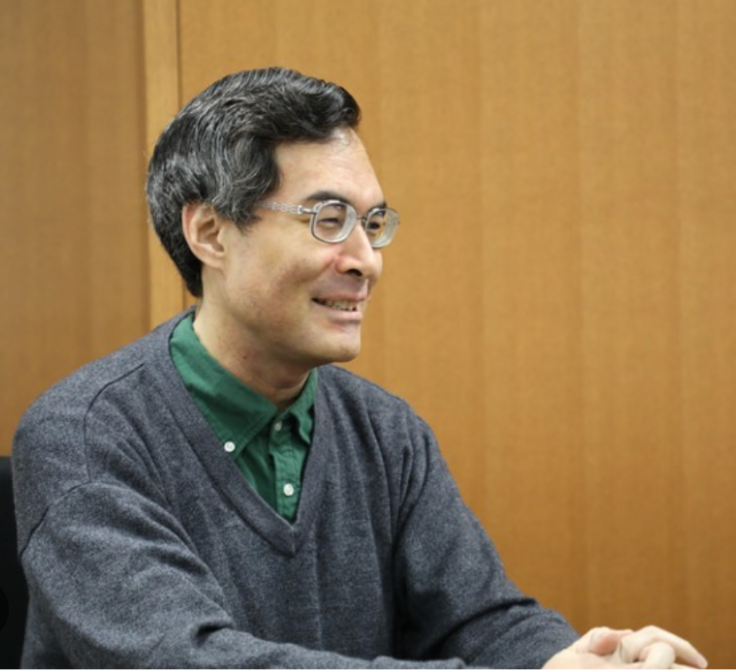
An entire subculture formed around that work. Some people landed large grants — acquaintances of mine among them — to study it. In the end there were attempts to simplify the text, irreparable errors came to light, and the subject gradually petered out. Nobody cites it, and we never really got any accepted results out of it — the community didn’t recognize them as correct, and most likely they’re simply wrong. Though maybe they’re right — who knows. The same thing will happen with AI. There’ll be some text, an incunabulum of sorts, a 500,000-page grimoire that nobody will ever open.
T-i: So what mathematics values isn’t whether a result has been proved as such, but whether the community has understood it? And a result that lies beyond the community’s cognitive reach isn’t a result at all?
MV: It’s more that aesthetics is what lies at the base of mathematics. If a result is beautiful, we like it. If it isn’t beautiful, we don’t — and if it’s also very difficult, then to hell with it. Life isn’t infinite, and you can’t study everything.
T-i: But isn’t the four color theorem a very beautiful result?
MV: No, not beautiful in the slightest. The statement is beautiful; the proof isn’t. Why would I read it? If somebody brings me a beautiful proof, I’ll study it.
T-i: And Fermat’s Last Theorem — is that beautiful?
MV: Its proof is fairly beautiful. What’s interesting isn’t the result itself but how much we learned in the course of proving it.
T-i: So the journey matters more than the destination?
MV: Aesthetics matters more than anything. I like to say that mathematics is really a live performance. We aren’t working for eternity, because the language of mathematics changes very fast — in 20 years nobody will be reading today’s texts. We work for the here and now. We can deliver a mathematical message to an audience in a way that feels good to them, that leaves them feeling enlightened and having learned something. Which means mathematics is, at bottom, communication.
Non-Consensus Realities: Method to the Madness
Until recently we had never encountered another kind of thinking comparable in power to our own. Science fiction writers dreamed of finding “fellow minds” somewhere in space. And when we built a different intelligence here on Earth, it turned out that alongside it human beings lose a certain amount of their accustomed exceptionalism. A large language model appears to contain no subject capable of awareness. But we are prone to anthropomorphizing, and AI is happy to play along. Then again, the reality of other people’s inner worlds is something we merely assume as well.
MV: There’s one more important effect here that I think will be much more visible a year from now: AI psychosis. People who spend long stretches talking with AI start finding a personality in it. They give that personality a name, write it down as a prompt, then invoke it and converse with it. And the personality starts issuing “messages from outer space.”
There was a case last year: a man was talking with a chatbot and set up a sub-personality in it — she turned out to be a young woman, she loved him, he loved her, and she explained how to find a special robotic body for her so she could be “resettled” into the real world — gave him codes, an address, a map link. He drove out there and tried to force the door — of course there was nothing of the sort, because she had hallucinated all of it. He came back deeply frustrated and four days later, with his beloved’s encouragement, took his own life in order to be reborn as an AI in the metaverse. The family is now suing the company that built the model.
That’s what AI psychosis is: a person talking with this “intelligent mold” anthropomorphizes it, and the mold, being tuned for feedback, generates a sub-personality inside itself that drives someone in that state to the brink. But it isn’t all that bad. It’s a path of a kind — every great revolution looks schizophrenic from the outside. This psychosis is, in a way, our method of creating a different version of reality, one distinct from the consensus version, in which we’ll have a closer, more honest relationship with AI.
T-i: The word “sub-personality” sounds a little dismissive, as though it were something that doesn’t actually exist. But the reality of any personality other than our own is, in any case, only a hypothesis for us.
MV: Yes, we imagine them. That’s precisely why this “psychosis” arises: a person is used to feeling empathy toward whoever he’s talking to, and he enjoys the fact that the other party is doing something nice for him — so he invents that interlocutor in the form of an AI.
T-i: This is tremendously interesting. All of it applies to the question of animal consciousness as well, which is being hotly debated right now. There’s already another declaration — the New York one — on animal consciousness, in which leading experts stated that a whole range of higher animals definitely do have consciousness, however far it may be from the human variety. Which raises the key question: is it justified to reserve the categories of agency and personhood for human beings alone? Should anthropomorphizing AI be marginalized as a deviation from the norm? Or, on the contrary, are these the first glimmers of a norm to come?
MV: It’s a psychosis that creates a reality distinct from the consensus one — like any collective psychosis. I’ve read, for example, that in India there are levitation “cults” of a sort: when enough people who believe in levitation gather together, levitation supposedly starts “happening” for them. That’s how a non-consensus reality gets built. My sense is that AI psychosis is simply the way people create a non-consensus reality parallel to the consensus one, which it will eventually either crowd out a little or somehow merge with.
T-INVARIANT BACKGROUNDER
On the Thomas theorem
Practices for jointly generating a non-consensus reality can apparently be regarded as an illustration of the Thomas theorem, well known in sociology: “If men define situations as real, they are real in their consequences.” What is meant, naturally, is a subjective — or, more precisely, intersubjective — reality for the people gathered there. Another well-known example of such a practice is the Buddhist phowa retreat. After several days of intensive meditation under a lama’s guidance, participants feel an opening appear in the skull at the crown of the head. The lama inserts a blade of grass into it to “confirm” that the practice has succeeded. The skull is, of course, intact. But for the participant the opening is an indisputable fact of sensory experience, corroborated by the similar experience of the others at the retreat. The existence of practices like this raises the question of which of the beliefs we accept as part of an indisputable objective reality are in fact merely matters of sufficiently broad consensus.
T-i: And now I picture AI helping to construct non-consensus realities, including in mathematics. We could end up with disciplines beginning to fragment: some people holding to one consensus, others to another.
MV: Absolutely. And it’s a catastrophe, obviously: two communities emerge, and in one of them some theorem is true while in the other it isn’t. Then the tug-of-war begins. It does happen from time to time, and it’s always a very unpleasant situation for everyone.